Eliminate manual operations at scale.
We help finance and industrial teams remove manual workload from approvals, reporting, coordination, and follow ups so execution gets faster, costs stay under control, and capacity increases without hiring.
Structured delivery. Measurable outcomes. Built to run inside real organizations.
Faster execution cycles
Work progresses without waiting, chasing, or unnecessary back-and-forth.
Clear ownership by design
Responsibilities are explicit, traceable, and enforced by the workflow itself.
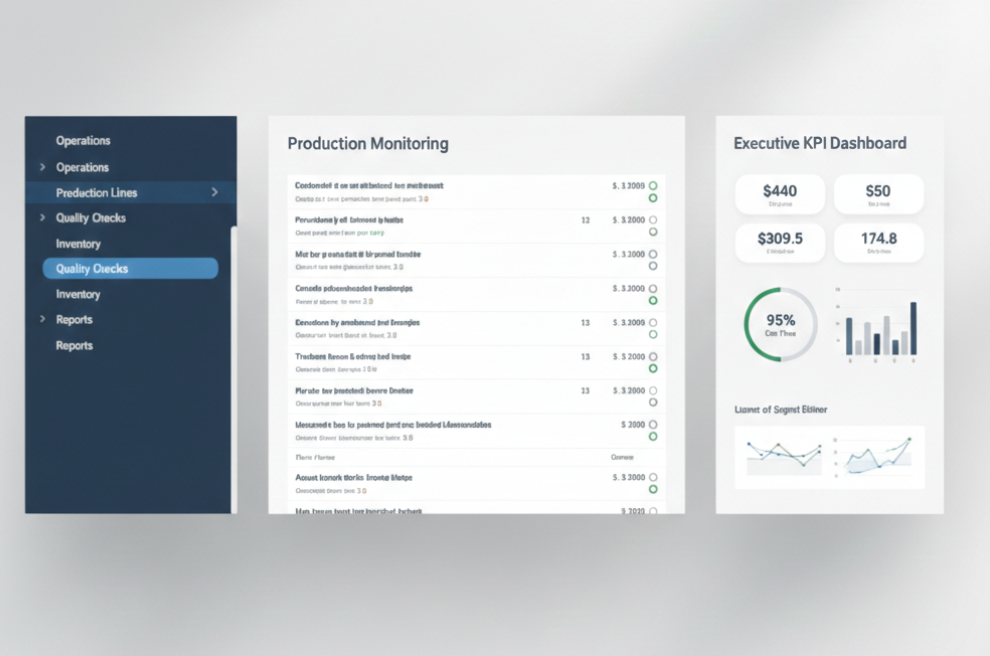
Operational visibility
One view of status, blockers, workload, and execution progress.
Manual operations don’t scale.
Most inefficiency is not visible. It happens quietly through manual work that becomes normal over time.
Work moves through email chains, spreadsheets, messaging, and repeated follow ups. Ownership becomes unclear. Approvals slow down. Reporting turns into consolidation. Progress becomes difficult to track.
Execution slows without anyone choosing it
Approvals, missing inputs, and handovers introduce silent delays that compound over time.
Manual follow ups consume capacity
Teams spend expert time coordinating work instead of making decisions and delivering outcomes.
Leadership lacks a reliable view
Status lives across tools and people. Decisions happen late because the picture is incomplete.
We remove the manual layer between tools, teams, and approvals. We replace unstructured coordination with a controlled operating system that makes ownership, status, and next actions obvious.
Faster approvals and execution cycles, fewer errors and less rework, more capacity without hiring, and clear visibility that leadership can trust.
AI Ops Acceleration Program™
A 45 day operational deployment designed to remove manual workload from critical workflows, with clear scope and ownership.
What is included
How delivery runs
Approvals that stall because inputs are missing or ownership is unclear. Reporting that depends on manual consolidation and last minute fixes. Coordination that lives in chat threads and inboxes with no reliable status. Follow ups that consume team capacity and create friction across functions.
A structured operational system that runs inside your organization with clear ownership, controlled execution, and one view of progress. The result is faster cycles, cleaner handovers, and regained capacity for high value work.
Request a 15 minute Ops Fit Check.
A short conversation to confirm whether manual operations are creating measurable cost, which workflows to target first, and whether the engagement is a fit.
FAQ
A few practical questions teams ask before starting.
Do we need to replace our systems?
No. We integrate with existing tools and workflows. The goal is to remove manual work between systems.
How do you choose the four workflows?
We select workflows based on volume, pain, and measurable impact such as time lost, delays, rework, and operational risk.
Is this an IT project?
No. It’s an operational deployment. We collaborate with IT only where needed for access and governance.
What makes it measurable?
We define baseline and target metrics before build such as time spent, cycle time, error rate, and backlog.
What happens after go live?
We ensure the system stays reliable as operations evolve through monitoring, fixes, and controlled improvements.